Social SEO Explained: How Instagram and YouTube Are Replacing Google for Discovery
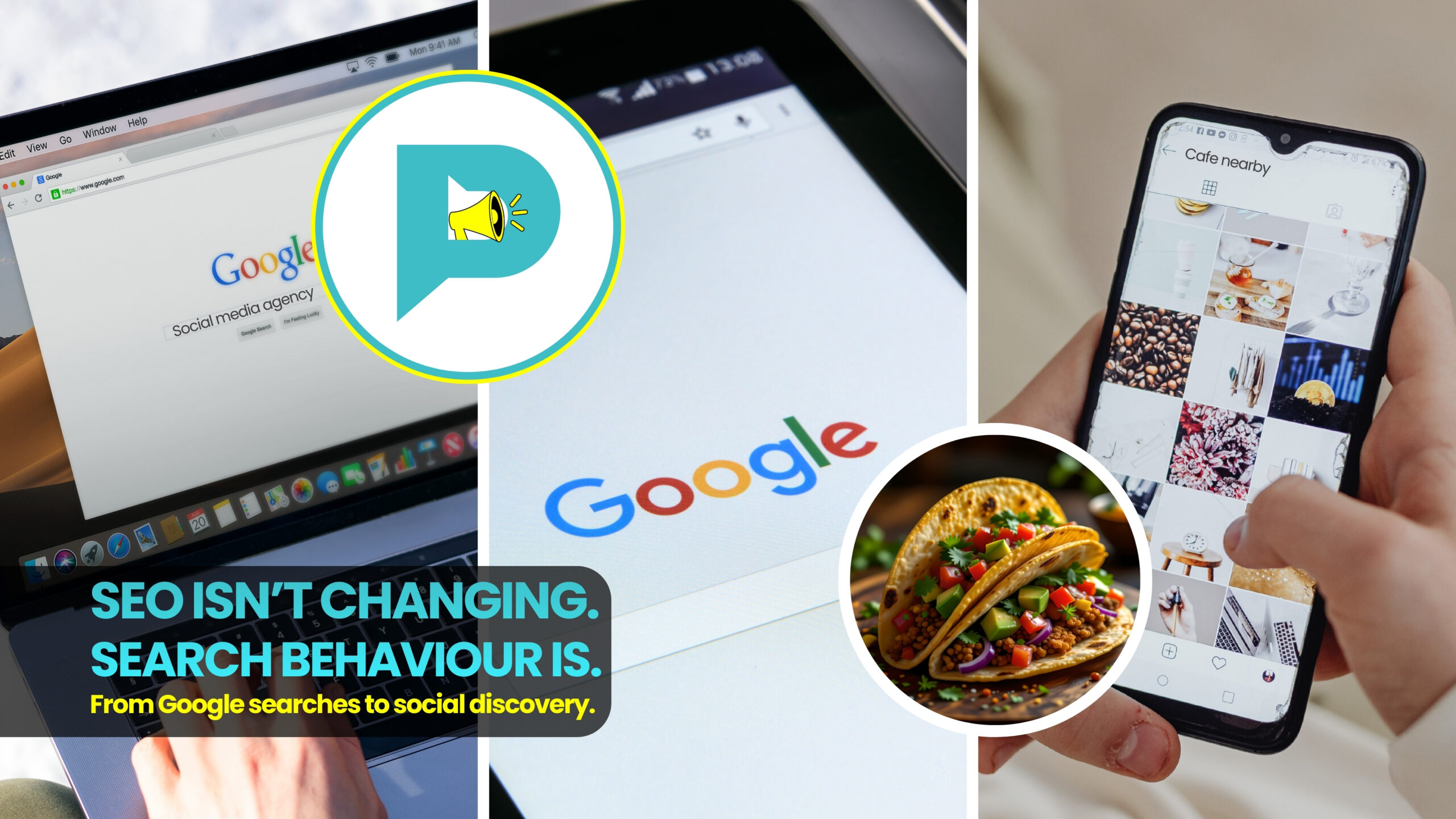
Why “social SEO” matters in 2026 and how your graphics and posts should change for brand visibility.
Remember when “just Google it” was the ultimate answer to every question? Well, Gen Z just said “okay, boomer” and started typing their queries into Instagram search bars instead. Welcome to 2026, where social media platforms aren’t just for posting your coffee art – they’re the new search engines, and honey, Google is sweating.
If you’re still treating Instagram captions like diary entries and YouTube titles like inside jokes only your mom would get, we need to talk. Social SEO is here, it’s real, and it’s probably why your competitor’s mediocre content is somehow getting more eyeballs than your masterpiece.
What Exactly Is Social SEO (And Why Should You Care)?
Social SEO is basically the art and science of optimizing your social media content so people can actually find it when they search. Think of it as traditional SEO’s cooler, younger sibling who knows all the Instagram Trends and actually responds to DMs.
Here’s the tea: according to recent studies, nearly 40% of Gen Z prefers searching on Youtube and Instagram over Google. When they want restaurant recommendations, skincare routines, or “how to look like they have their life together,” they’re not asking Google—they’re typing into social search bars or asking their favorite creators.
Why? Because search results on social platforms come with actual humans showing you the thing, not just telling you about it. It’s like the difference between reading a recipe and watching Gordon Ramsay make it while roasting everyone in the kitchen. One is informative; the other is an experience.
How Gen Z Actually Searches (Spoiler: It's Nothing Like You Think)
If you think Gen Z is typing “best budget smartphones 2026” into Instagram like they’re filing a tax return, think again. Their search behavior is more conversational, visual, and vibes-based than any SEO consultant from 2020 could have predicted.
Here’s what Gen Z search queries actually look like:
- “Outfit inspo for someone who’s dead inside but makes it fashion”
- “Pasta recipes that won’t make me feel like a failure”
- “Desk setup aesthetic but I’m broke”
- “Places to cry in public that look cute in photos”
Okay, maybe that last one is specific, but you get the point. They’re searching with personality, emotion, and context. They want content that speaks their language, not corporate robot speak.
And here’s the kicker: they’re not just searching with keywords. They’re searching with emojis, they’re using voice search, and they’re discovering content through hashtags, sounds, and even locations. The search behavior is multi-dimensional, like that one episode of Stranger Things where everything happens in different timelines simultaneously.
The Social SEO Toolkit: Keywords, Captions, and Everything In Between
Keywords: Yes, They Still Matter (But Different)
Remember stuffing “best social media agency in Patna” seventeen times into a blog post? Yeah, that doesn’t fly on social media. You’ll just look unhinged.
On social platforms, keyword optimization means:
- Using natural language in your captions. Instead of “affordable skincare products for sensitive skin,” try “broke girl skincare that won’t make your face angry.” Both target the same audience; one just doesn’t sound like a robot wrote it.
- Placing keywords strategically in your bio, captions, alt text, and even in your content itself. If you’re a coffee shop in Bangalore, don’t just post pretty latte art—mention “best filter coffee in Bangalore” somewhere in that caption.
- Using long-tail keywords that match actual search intent. People aren’t searching “shoes”- they’re searching “chunky sneakers that make me look like I’m in a K-drama.”
Captions: Your Secret SEO Weapon
Your caption isn’t just a place to drop a vague quote from Pinterest. It’s prime SEO Marketing, baby.
Here’s how to optimize captions without sounding like you’re trying to sell essential oils to your high school friends:
- Front-load important keywords. Put them in the first line before the “see more” cut-off. Instagram shows roughly the first 125 characters, so make them count.
- Write for humans first, algorithms second. If your caption reads like a keyword salad, people will scroll faster than flash.
- Include a call-to-action. “Save this for later,” “share with someone who needs this,” or “comment your favorite” all boost engagement, which signals to algorithms that your content slaps.
- Use paragraph breaks. Nobody wants to read a wall of text. We’re not trying to decode the Rosetta Stone here.
Alt Text: The Unsung Hero
Alt text isn’t just for accessibility (though that alone makes it crucial). Instagram’s algorithm reads it, and it helps your content show up in searches.
When writing alt text, describe what’s actually in the image using natural language and relevant keywords. Instead of “image1234.jpg,” try “woman wearing sustainable fashion outfit in neutral tones holding reusable coffee cup.”
Thumbnails and Hooks: Your First Impression
YouTube thumbnails and video hooks are like dating app profile pictures – you have approximately 0.3 seconds to make someone interested before they swipe left on your content.
- For thumbnails: Use high contrast, readable text, and expressive faces. Think MrBeast, not corporate stock photo. Include your target keyword in the thumbnail text when possible.
- For hooks: The first 3 seconds of your video should answer “why should I care?” If you’re making a video about SEO tips, don’t start with “Hey guys, welcome back to my channel.” Start with “I ranked #1 on Google in 30 days using this trick.”
How Brands Should Redesign Posts for Discoverability
Here’s where most brands are fumbling the bag harder than Ted Lasso’s team in season one (before they got good).
Think Like a Search Engine, Post Like a Human
Your content needs to be both discoverable and enjoyable. It’s a balancing act, like trying to eat tacos while driving—challenging but not impossible.
- Structure your content around questions people actually ask. Create Instagram carousels titled “10 things I wish I knew before starting a business” or YouTube videos called “How I make $10k/month as a freelancer (realistic breakdown).”
- Use searchable formats. Lists, how-tos, tutorials, and comparisons perform well because they match search intent. People search in question format; give them answers in the same language.
- Create evergreen content. Not everything needs to be a trend. Some of your best-performing content will be those timeless pieces that answer questions people search for year-round.
Hashtag Strategy (No, Hashtags Aren't Dead)
People love to declare hashtags dead like they’re writing obituaries for fun. Hashtags aren’t dead; you’re just using them wrong.
- Use a mix: 3-5 highly specific hashtags, moderately popular ones and broad ones. This gives you visibility at different levels.
- Create a branded hashtag for your community. It’s searchable, trackable, and builds brand identity.
- Research before you hashtag. Click on potential hashtags and see what content appears. If your mindful yoga post would appear next to something completely unrelated, that hashtag isn’t helping you.
Optimize Your Profile for Search
Your Instagram bio and YouTube channel description are crawled by search engines. Yes, Google still matters for this part.
Include relevant keywords naturally, add a location if you’re a local business, and make sure your name/handle reflects what you do. If you’re a graphic designer named Sarah, maybe “Sarah | Graphic Designer | Brand Identity” works better than “✨🎨 creative soul ✨.”
SEO Mistakes Businesses Are Still Making in 2026
Let’s address the elephant in the room – the mistakes that make SEO experts cry into their keyword research tools.
Mistake #1: Posting Without Captions (Or Using Meaningless Ones)
“Living my best life ✨” tells us nothing. It doesn’t help anyone find your content, and it definitely doesn’t help the algorithm understand what you’re posting about.
If you’re a restaurant, caption your food photo with what it is, flavor descriptions, dietary information, and location. Give the algorithm something to work with.
Mistake #2: Ignoring Video Content
Instagram Reels, YouTube Shorts – video is king, queen, and the entire royal court. If you’re still posting static images exclusively, you’re basically showing up to a pool party in a snowsuit.
Video content gets prioritized in feeds and search results. Even if you hate being on camera, there are ways to create engaging video content (text-on-screen videos, b-roll with voiceovers, animations).
Mistake #3: Inconsistent Posting
The algorithm rewards consistency. Posting once a month and expecting viral success is like going to the gym once and wondering why you don’t look like Thor. It doesn’t work like that, bestie.
Create a content calendar and stick to it. Consistency beats perfection every time.
Mistake #4: Not Engaging With Your Audience
Social media is social. Revolutionary concept, I know. If people comment on your posts and you ghost them like a bad Tinder date, the algorithm notices. Reply to comments, engage with other accounts, be a human.
Mistake #5: Copying Trends Without Context
Just because a trending audio is viral doesn’t mean it fits your brand. A funeral home probably shouldn’t use the “Material Girl” sound for their content. Use trends strategically, not desperately.
The Future of Social SEO
Social SEO isn’t a trend—it’s a fundamental shift in how people discover and consume content. As AI-powered search features roll out on social platforms (Instagram’s AI search is already wild), optimization will become even more crucial.
The brands that win will be those who understand that social media platforms are no longer just distribution channels—they’re search engines, shopping platforms, entertainment hubs, and communities all rolled into one.
So yes, you still need your website. Yes, traditional SEO still matters. But if you’re not optimizing your social content for discovery, you’re essentially hiding in a digital closet hoping customers will somehow find you.
Start treating your Instagram captions like mini blog posts, your YouTube titles like Google search results, and your content like the searchable, discoverable, engaging assets they should be.
Because in 2026, if you’re not showing up in social search results, do you even exist? (Philosophically speaking, yes. But marketing-wise? Debatable.)
Now go forth and optimize. Your future discoverable self will thank you.
Ready to dominate social search and actually get discovered? At Prachar Buzz, we don’t just post content—we create SEO-optimized social strategies that get you found by the right people at the right time. Whether you’re struggling with captions that convert, hashtags that actually work, or just want to stop being invisible on Instagram, we’ve got you covered. Let’s turn your social media into a discovery engine. Get in touch with us today and let’s make your brand impossible to miss.