
7 Business Trends That Will Decide Who Wins in 2026

The business landscape has officially broken ties with the playbook of the early 2020s. We are no longer living in a period of digital transition; we are operating in a fully digital-native, AI-centric market where efficiency, precision, and authenticity dictate profitability. As a forward-thinking business owner, you may have noticed that the strategies that brought you growth over the last three years are yielding diminishing returns today.
At Prachar Buzz, we closely monitor the underlying forces shaping the market to help our clients build highly resilient brand strategies. The reality of the current market is clear: the gap between industry leaders and the companies lagging behind is widening at record speed. Survival requires moving past passive observation and executing with strategic agility.
To help you navigate this terrain, we have analyzed the core transformations occurring across consumer psychology, corporate operations, and digital marketing tech stacks.
Here are the 7 critical business trends that will decide who wins and who becomes obsolete.
1. The Transition to Agentic AI and the Rise of a Silicon-Supported Workforce
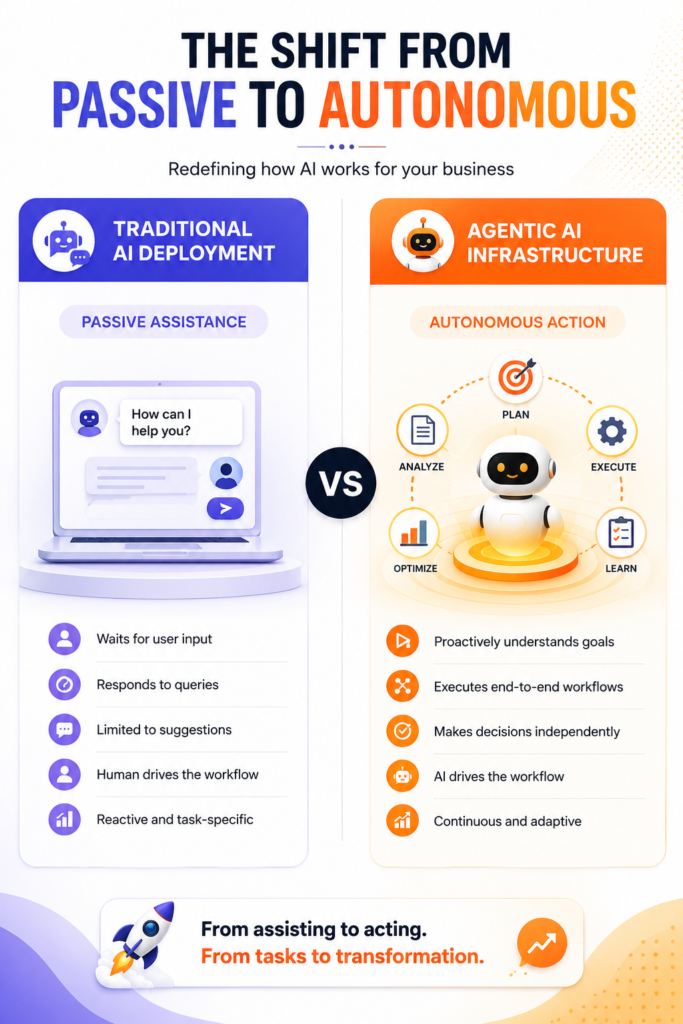
For the past couple of years, artificial intelligence was largely used as a glorified typewriter or a brainstorming partner.
Businesses utilized it to draft quick emails, generate blog outlines, or automate basic data entry.
The current shift is moving from conversational AI to Agentic AI—autonomous systems capable of executing end-to-end multi-step operational workflows with minimal human intervention.
Instead of simply writing an email draft, agentic workflows allow an AI to analyze customer behavior signals, pull relevant product data, cross-reference pricing metrics, autonomously compile a personalized email sequence, and deploy it while tracking micro-conversions in real time.
Why This Trend Matters for Growth
According to recent industry data, companies that move past shallow AI usage and deeply embed autonomous agents into their tech stack are realizing up to a 70% reduction in workflow timelines. The point of failure for many businesses is attempting to automate a broken, disorganized process. Winners are entirely redesigning their operational pipelines from the ground up to support a fluid, human-agent hybrid workforce.
The Marketing Multiplier
From a marketing perspective, Agentic AI completely redefines ad management. Instead of a human spending hours tweaking daily budgets, analyzing A/B testing variants, and managing bid strategies across platforms, agentic systems run continuous optimization loops. This frees up creative marketing minds to focus on core positioning, brand messaging, and creative excellence, the areas where human empathy cannot be replicated.
2. Generative Engine Optimization (GEO) Succeeds Traditional SEO
The mechanics of how consumers find information online have transformed completely. The traditional search box that populated a list of blue links is no longer the sole gateway to the internet. Today, tens of millions of users turn to large language models (LLMs) and conversational search engines to get direct answers to their queries.
As a result, traditional Search Engine Optimization (SEO) has evolved into Generative Engine Optimization (GEO).
Optimization Layer | Traditional SEO | Generative Engine Optimization (GEO) |
|---|---|---|
User Intent Focus | Fragmented fragments & short keywords (e.g., “best corporate lawyer”) | Conversational, highly contextual multi-sentence questions |
Content Criteria | Keyword density, backlink volume, word counts | Topic authority, technical accuracy, citations, structured data |
Output Delivery | Ranking on a search engine results page (SERP) | Inclusion in the AI synthesis engine’s final direct answer |
Cracking the Code of GEO
To rank inside an AI’s summarized response, your content can no longer be thin, generic, or written purely for search bots. Generative engines prioritize depth, relevance, and undisputed authority. To win this space, your digital presence must feature:
- In-Depth Topic Clusters: Building comprehensive nodes of interconnected knowledge that answer all tangential user questions.
- Structured Behind-the-Scenes Schema Markup: Providing clean, clear data structures that allow machine learning algorithms to easily parse your website’s value proposition.
- Multimedia Integration: High-quality videos, clear technical infographics, and expert quotes that provide high contextual value.
If your brand isn’t actively optimized for generative search synthesis, you risk becoming invisible to a massive, highly qualified pool of buyers who ask AI engines for direct software, retail, and service recommendations.
3. First-Party Data Consolidation Amid the Third-Party Tracking Collapse
Privacy compliance is no longer just a legal hurdle managed by your legal team—it is a foundational pillar of modern marketing architecture. With the systematic elimination of third-party tracking cookies and the tightening of international data privacy regulations, relying on ad networks to magically find your ideal customer is a losing strategy.
The businesses winning today are those treating first-party data collection as critical infrastructure.
First-Party Data Defined: The proprietary information you collect directly from your audience with their explicit consent. This includes email lists, SMS subscriptions, direct user behavior on your application or site, customer purchase history, and interactive survey responses.
Rebuilding Your Customer Acquisition Funnel
When you own your data, your reliance on escalating ad platform costs drops significantly. First-party assets allow businesses to unlock:
- Lower Customer Acquisition Costs (CAC): Instead of continuously paying ad networks to introduce your brand to cold audiences, you nurture an owned list of deeply engaged prospects.
- Hyper-Personalized Experiences: Utilizing exact behavior metrics to deliver customized product recommendations, personalized email flows, and specialized client portals.
- Predictive Churn Modeling: Using historical data pipelines to identify precisely when a client or customer is showing signs of disengagement, allowing your customer success teams to intervene proactively.
Building an owned community via newsletters, exclusive platforms, or high-value gated resources ensures that your audience remains yours, regardless of how algorithmic ad networks shift their internal rules.
4. The Shift Toward "Quiet Luxury" and Hyper-Authentic Visual Branding
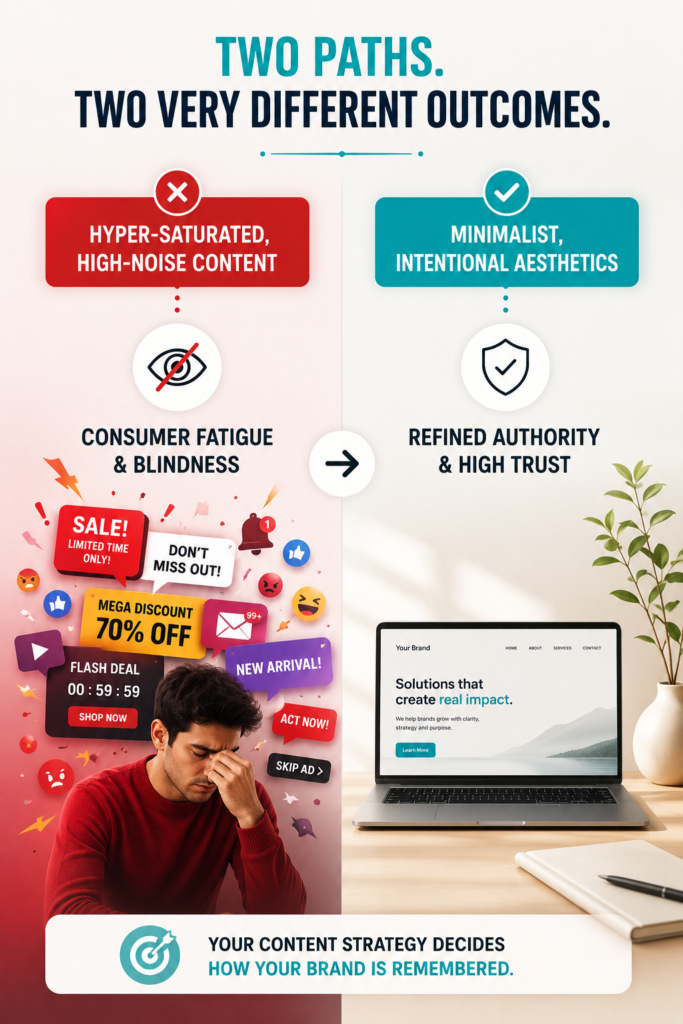
We have reached a point of absolute content saturation. Because generative tools have made it remarkably easy to produce basic graphics and stock text, the internet has become flooded with generic visual media.
Consumers have developed a keen eye for this and are actively tuning out uninspired, low-effort brand assets.
The visual trend defining the current corporate landscape is Refined Minimalism – often referred to as “quiet luxury” in corporate branding.
The New Rules of Visual Identity
Winning brands are intentionally moving away from loud, chaotic layouts and leaning into expansive negative space, premium typography, and ultra-high-definition, realistic visual content. Whether it is an architectural brochure, a real estate campaign, or a consumer food brand’s social media feed, the demand for cinematic lighting, precise texture details, and authentic human emotion has skyrocketed.
Investing in top-tier creative assets—such as full-frame product photography simulations, customized illustration styles, and cohesive brand design systems—tells your audience that your company operates at a premium level. In a world full of digital noise, clean and thoughtful design stands out as a clear mark of quality.
5. End-to-End Customer Journey Mapping Over Disconnected Campaigns
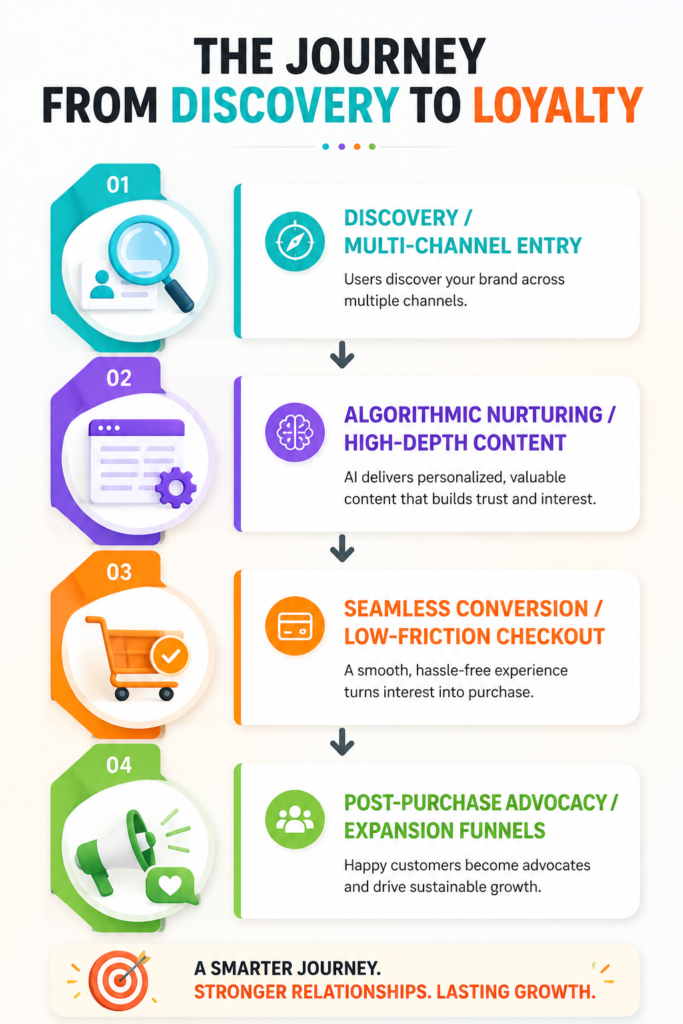
Many businesses still treat marketing like a series of disjointed slot machines: they launch an ad campaign here, post a casual video there, send a random holiday discount email, and hope it all results in sustainable revenue. In a tight, performance-driven economy, this fragmented approach is incredibly inefficient.
Growth-oriented enterprises have completely replaced campaign-focused thinking with holistic customer journey mapping.
Every single point of entry – whether it is a specialized local search, an interactive social commerce post, or an educational webinar, must link to a structured, highly intentional next step.
Eradicating Gaps in the Funnel
When you map out the entire journey, you can see exactly where prospective clients lose interest. Are they clicking on your social media ads but leaving your landing page within three seconds? That points to a positioning mismatch. Are they putting items in their cart or filling out a contact form but failing to finalize the deal? That signals a high-friction checkout or sales process.
By strategically optimizing every single touchpoint, you create a smooth pipeline that guides a cold prospect from initial awareness to loyal brand advocate.
6. Social Commerce and Algorithmic Discovery as the Primary Retail Engine
The traditional retail funnel has flattened. Previously, a consumer discovered a product on social media, searched for it on a separate search platform, navigated to an e-commerce website, created an account, and eventually completed a purchase. Today, discovery and conversion happen simultaneously inside the algorithmic feeds of major social platforms.
Social commerce is no longer an optional experimental feature for digital brands; it is a primary driver of modern consumer transaction behavior.
Winning the Battle for Fragmented Attention
As consumer attention splits across specialized creator networks, algorithmic video ecosystems, and niche digital spaces, launching one massive mass-media campaign is no longer effective. Success relies on orchestrating a network of smaller, highly targeted touchpoints.
- Native Platform Checkouts: Eliminating all purchase friction by allowing buyers to complete transactions directly inside their active browsing stream.
- Micro-Influencer Frameworks: Partnering with deeply trusted, community-focused creators whose audiences show exceptionally high engagement rates compared to massive celebrity accounts.
- Platform-Native Formats: Designing promotional content that feels organic to the specific channel, avoiding overly corporate, disruptive advertisements.
By meeting your buyers exactly where they already spend their digital time, you minimize drop-off rates and turn passive attention into direct sales revenue.
7. Performance Measurement, ROI Attribution, and the End of "Blind" Marketing Spend
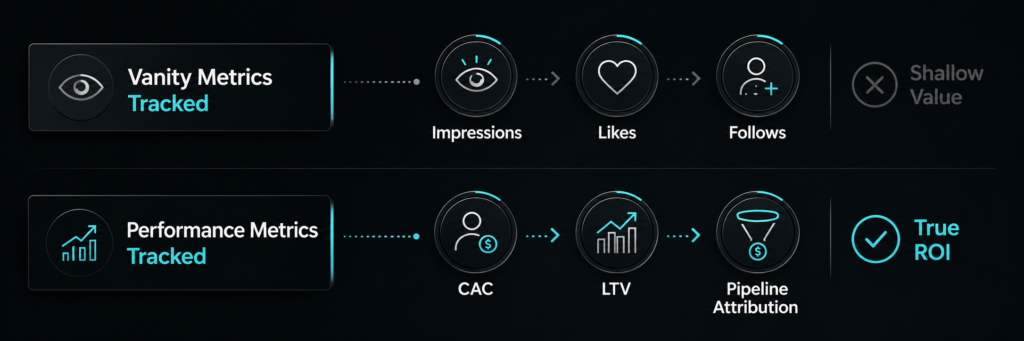
The era of vanity metrics is officially over. Boards, CFOs, and business owners are no longer satisfied with reports that highlight high impression counts, superficial page likes, or generic traffic increases that don’t translate to bottom-line revenue. With economic landscapes demanding stricter budget management, marketing teams must justify every dollar spent with clear, data-backed ROI attribution models.
Transitioning to a Data-Driven Culture
To succeed in this disciplined environment, businesses must implement rigorous data tracking infrastructures that accurately measure:
- Customer Lifetime Value (LTV): Understanding the true, long-term financial worth of a customer to smarter allocate acquisition budgets.
- Multi-Touch Attribution: Pinpointing exactly which combinations of content pieces, ads, and touchpoints contributed to a final sales conversion.
- Customer Acquisition Cost (CAC) Efficiency: Constantly evaluating customer acquisition costs against total revenue generated to keep profit margins healthy.
Operating with total data clarity allows business leaders to confidently reallocate capital away from underperforming channels and double down on the high-conversion platforms that actively scale the enterprise.
Turn 2026 Business Trends Into Your Competitive Advantage With Prachar Buzz
Winning the rest of this year and setting your business up for long-term growth isn’t about adopting every single new piece of technology that hits the market. It’s about building a cohesive, data-driven, and highly authentic brand ecosystem that leverages advanced tools while keeping human connection at its center.
The companies that adjust their strategies to align with these seven core trends will capture massive market share, while those relying on yesterday’s playbooks will find it increasingly difficult to compete. Navigating this rapidly evolving digital landscape requires a strategic, experienced partner who understands how to transform these complex market shifts into highly profitable marketing campaigns.
At Prachar Buzz, we specialize in cutting through the digital noise to build high-converting first-party data structures, advanced generative engine optimization strategies, and premium visual identities that position your business as an undisputed industry leader.
Don’t let your competition outpace you in an era of rapid transformation. Contact Prachar Buzz today to schedule a comprehensive marketing infrastructure audit, and let’s engineer a hyper-targeted strategy that ensures your business comes out on top.